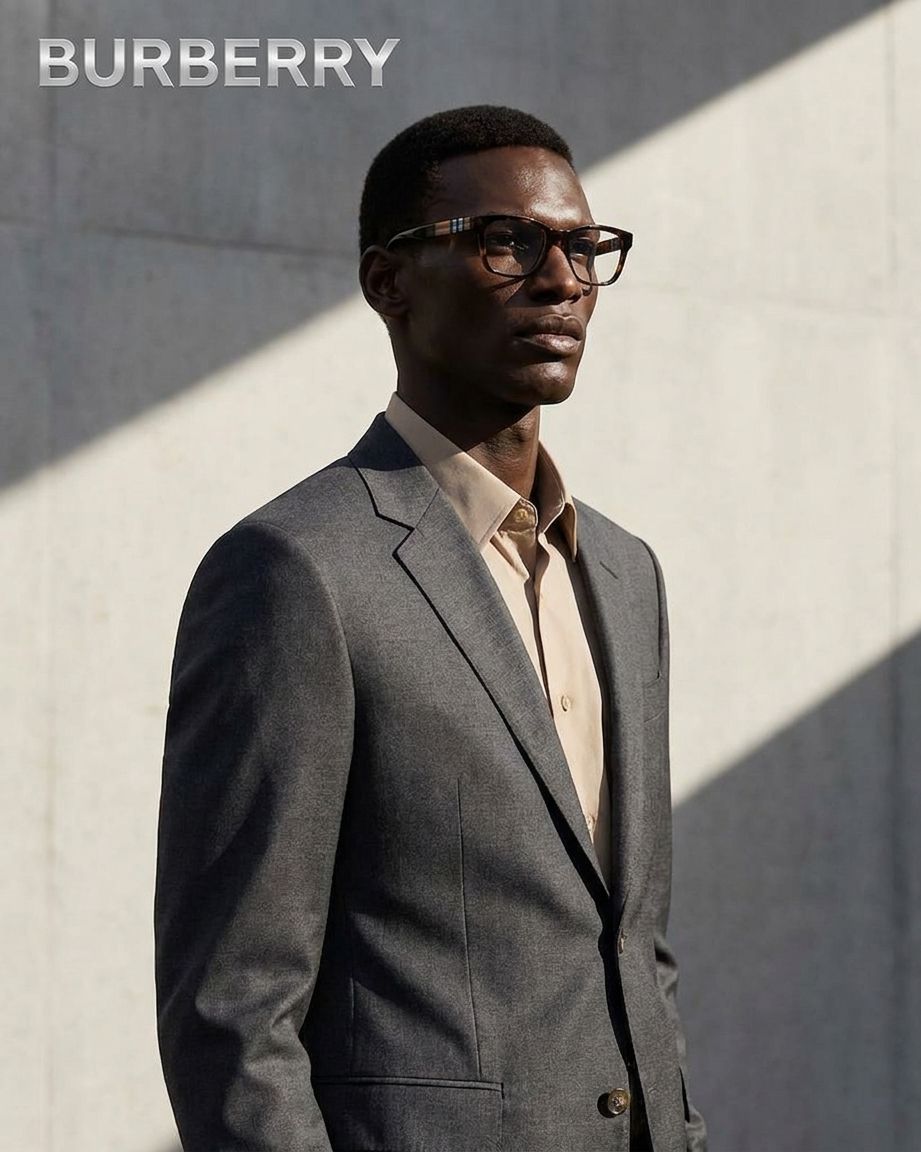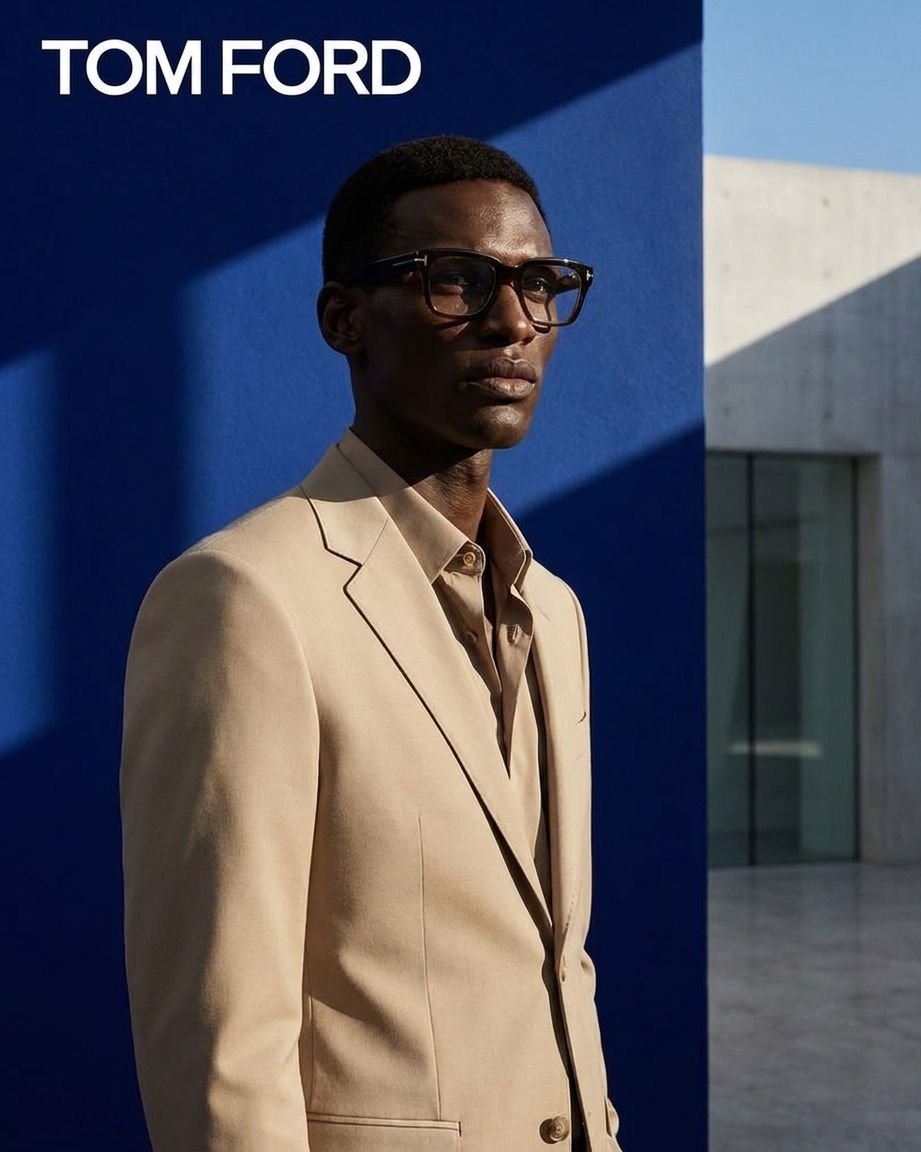
Tom Ford built its eyewear reputation on one idea: glasses are jewelry for the face, not a medical accessory you tolerate. For the executive who needs frames that read as authority in a boardroom and ease at a dinner table, that idea matters more than any spec sheet.
- Tom Ford eyeglasses win the executive look through weight, proportion, and the signature T-bar temple detail, not logos.
- Acetate frames in tortoise or black read as boardroom-appropriate; thin metal aviators skew younger and less authoritative.
- Fit trumps trend: a frame that pinches by 3pm undoes the whole look no matter how sharp it is on the rack.
- Dellamoda's guide to professional eyewear pairs well with lens-color choices for the same executive wardrobe.
Why this matters
Eyewear sits closer to your face than any other accessory you own, which means it does more silent talking than a watch or a tie ever will. In 2026, video calls have made faces the primary canvas for first impressions, and a frame that fits poorly or reads as trendy rather than considered undercuts everything else in the outfit. Executives who dress with intention already know this about their shoes and their belts; the same logic applies to what sits on the bridge of the nose.
Tom Ford eyeglasses have earned a specific reputation inside that logic. The house is known for substantial acetate, restrained branding, and a signature T-shaped metal detail on the temple that reads as considered rather than loud. That combination is exactly what an executive wardrobe needs: presence without shouting.
Who this is for
This guide is built for the professional who wears glasses daily and wants them to function as part of a deliberate wardrobe, not an afterthought picked up at an optical chain. Think partners at law firms, finance executives, founders doing investor meetings, and anyone whose job puts their face in front of clients, boards, or cameras for a meaningful part of the week. If you already think carefully about designer eyeglasses for a professional look, this is the next layer down: which specific frame family, shape, and finish actually earns the word "executive."
What to look for in Tom Ford eyeglasses for the executive look
Frame weight and how it sits by mid-afternoon
A frame that photographs well on a rack can still fail at hour eight. Executives spend long stretches in meetings, on calls, and reading screens, so weight distribution across the bridge and temples matters more than it does for someone who wears glasses two hours a day. Acetate frames feel substantial without necessarily feeling heavy when the temple tips are properly weighted, and that balance is worth testing in person before you commit.
Restraint in branding
The executive look rewards frames where the house signature is a design detail, not a logo plastered on the temple. Tom Ford's T-bar hardware does this well: it identifies the house to anyone paying attention while reading as architecture rather than advertising to everyone else. A frame with a large exterior logo undercuts the quiet authority you're going for.
Lens shape relative to face shape and job function
A rectangular or subtly cat-eye lens shape tends to read as more deliberate and structured on camera and in person, which serves boardroom settings well. Round or heavily oversized shapes can skew more creative-industry than corporate, so match the lens geometry to the room you're actually walking into, not just to what's flattering in a mirror.
Color and finish
Tortoise and black remain the two colors that never look out of place in a professional setting, and both age well against gray suits, navy suits, and the full range of shirt colors an executive wardrobe rotates through. Gold or gunmetal metal hardware on the temple adds warmth without adding attention, which is the entire point.
Lens tint and coating for screen-heavy days
If your calendar is built around video calls and monitors, lens coating matters as much as frame shape. Choosing the right lens color applies to eyeglasses too: a light anti-reflective coating keeps your eyes visible on camera instead of washing out into glare, which is a small detail that reads as polish on a Zoom screen.
Fit at the temple and nose bridge
No frame earns an executive verdict if it slides down the nose during a presentation or leaves red marks by the end of a flight. Acetate frames from Tom Ford typically use adjustable nose pads or a built-in bridge shaped for a closer fit; either way, the fitting appointment matters more than the frame name on the box.
Top picks for the executive wardrobe
The safe pick: a black acetate rectangle with the T-bar temple. This is the frame that works in every room from a Monday internal meeting to a Thursday client dinner. The rectangular lens shape adds structure to round or soft face shapes, and the black acetate reads as neutral against any suit color in rotation. Buy — it's the frame you reach for on the mornings you haven't decided what else to wear.
The wildcard: tortoise acetate with a subtle keyhole bridge. Tortoise carries more personality than solid black without tipping into casual territory, and a keyhole bridge (the small cutout at the top of the nose piece) is a detail most people register subconsciously as "expensive" without knowing why. It suits executives who want their eyewear to hint at individuality inside a conservative dress code. Consider — best for someone whose office culture allows a little more visual character.
The metal option: a thin gold-tone aviator-adjacent frame. Metal frames read lighter and more modern on camera, which matters if your job is video-call heavy. The tradeoff is that thin metal temples can feel less substantial in hand and, for some face shapes, drift toward a more casual register than acetate does. Consider — strong for tech-adjacent executive roles, weaker for law and finance settings that skew traditional.
What to skip: heavily oversized or statement-shaped frames. Oversized acetate or unusual lens shapes photograph beautifully on a runway and poorly in a conference room. They pull focus away from what you're saying and toward the frame itself, which is the opposite of what executive eyewear should do. Skip — save the statement shapes for weekend wear.
Build your executive eyewear edit
Browse Dellamoda's curated selection of designer eyewear and accessories.
What to avoid
- Frames with exterior logo plaques. They photograph as branded merchandise rather than personal style, which works against the quiet-authority goal of an executive look.
- Colored or mirrored lenses for daily indoor wear. These belong in sunglasses, not in eyeglasses meant for boardrooms and video calls; a mirrored or heavily tinted lens indoors reads as either a fashion statement or an attempt to hide, neither of which serves a professional setting.
- Ultra-thin rimless frames. They can look dated fast and rarely carry enough visual weight to register as a deliberate style choice rather than a medical necessity.
Verdict comparison
| Frame Type | Best For | Weight Feel | Verdict |
|---|---|---|---|
| Black acetate rectangle, T-bar temple | Daily boardroom rotation | Substantial, balanced | Buy |
| Tortoise acetate, keyhole bridge | Adding personality within dress code | Substantial | Consider |
| Thin gold-tone metal | Video-call-heavy, tech-adjacent roles | Light | Consider |
| Oversized or statement shape | Weekend or creative settings only | Varies | Skip for office wear |
Once you've settled on a shape, proper storage keeps acetate from warping and hinges from loosening between wears, which matters more for daily-driver frames than for anything worn occasionally.
FAQ
What makes Tom Ford eyeglasses look executive rather than trendy?
Restraint does it: acetate in black or tortoise, a rectangular or subtly cat-eye lens shape, and the T-bar temple detail rather than a visible logo. Oversized or heavily shaped frames read as fashion-forward rather than corporate, so the safest executive picks stay closer to classic proportions.
Are Tom Ford eyeglasses good for video calls in 2026?
Yes, provided the lenses have anti-reflective coating and the frame color contrasts gently with your skin tone rather than blending into it. Thin metal frames tend to look sharper on camera than heavy acetate, though acetate still reads well in person.
Is tortoise or black better for a corporate dress code?
Black is the safer default across the most conservative offices, while tortoise adds warmth and a touch of personality without breaking dress-code norms. Choose based on how much visual character your specific workplace culture tolerates.
How much should executive eyeglasses cost in 2026?
Pricing varies by retailer and frame line, so check current listings directly rather than relying on outdated figures. What stays constant is that acetate construction and the T-bar hardware detail are what you're paying for, not the branding.
Can metal-frame Tom Ford eyeglasses work in a law firm setting?
They can, but acetate frames still read as more traditional and substantial in the most conservative legal and finance environments. Metal works better in tech-adjacent or creative-leaning corporate cultures.
How do I know if a frame fits my face shape for a professional look?
The lens shape should contrast gently with your face shape rather than mirror it exactly, so round faces generally do better in rectangular frames and angular faces do better with slightly softened edges. A proper fitting, not a mirror selfie, is the only reliable test.
Do I need different eyeglasses for in-person meetings versus video calls?
Not necessarily two pairs, but the lens coating matters more for video calls since glare reads badly on camera. One well-coated acetate frame handles both settings without compromise.
What's the difference between Tom Ford eyeglasses and Tom Ford sunglasses for office wear?
Eyeglasses use clear or lightly tinted lenses appropriate for indoor, screen-heavy days, while sunglasses use darker or mirrored lenses meant for outdoor light. Wearing sunglasses-style tints indoors reads as affectation rather than function in a professional setting.
One last thing
The detail that separates a genuinely executive frame from a merely expensive one is almost never the lens shape people obsess over first — it's the temple weight at the point where the arm meets the hinge. Too light and the frame slides by 2pm; too heavy and it leaves a mark by 5pm. Try the frame on for longer than thirty seconds in the mirror before deciding, because that's the window where the real fit reveals itself.